
Every year, thousands of Nigerian students apply for scholarships like such as Chevening, Commonwealth, SEPLAT, Agbami, Jim Ovia, MTN Foundation, and NLNG, but only a small percentage succeed.
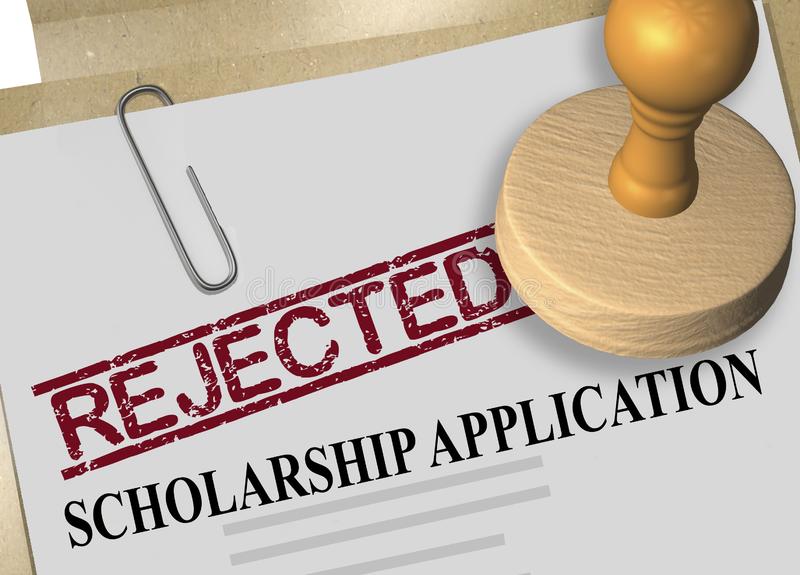
The painful part is that many brilliant students with good CGPAs get rejected not because they are unqualified, but because of avoidable mistakes in their applications.
In this very detailed and comprehensive guide, you will learn:
- The top 15 most common reasons scholarship applications get rejected in Nigeria
- Real-life examples of costly mistakes
- How to avoid each rejection reason
- Practical checklists and tips used by past winners
- What scholarship panels are really looking for
- A complete pre-submission review guide
Whether you are applying for undergraduate or postgraduate scholarships in 2026/2027, this article will help you significantly increase your chances of success.
Top 15 Reasons Scholarship Applications Get Rejected in Nigeria
1. Low CGPA or Poor Academic Performance
Why it happens: Most competitive scholarships (PTDF, SEPLAT, Agbami, Chevening, etc.) set a minimum CGPA of 3.5/5.0. Many students apply with 3.0 or 3.2 and hope for mercy.
How to Avoid It:
- Aim for a minimum CGPA of 3.8/5.0 for better chances.
- If your CGPA is low, focus on scholarships with more flexible requirements.
- Include strong explanation in your personal statement if there was a genuine reason for a dip in performance.
2. Incomplete or Poor Quality Documents
This is one of the top 3 reasons for rejection.
Common Issues:
- Blurred scanned documents
- Missing documents (transcript, admission letter, NYSC certificate, etc.)
- Wrong file format
- Passport photograph with coloured background
How to Avoid It:
- Scan all documents in high quality (300 DPI minimum)
- Name files properly (e.g., “John_Okafor_WAEC_Result.pdf”)
- Make a checklist of all required documents before starting the application
3. Submitting Generic or Weak Personal Statement/Essay
Many students copy and paste the same essay for every scholarship.
How to Avoid It:
- Write a fresh, tailored essay for each scholarship
- Answer the specific question asked
- Tell your unique story with specific examples
- Show clear future goals and how the scholarship will help Nigeria
4. Applying Late or Missing Deadlines
Scholarship portals often close exactly at midnight on the deadline day.
How to Avoid It:
- Apply at least 7–10 days before the deadline
- Set multiple reminders on your phone and calendar
5. Not Meeting Course or Level Requirements
Applying for Engineering scholarships when you study Business Administration, or applying as a 300 Level student when the scholarship is for 200 Level only.
How to Avoid It:
- Read the eligibility criteria twice before applying
- Only apply to scholarships that match your course and current level
6. Lack of Leadership or Community Impact
Scholarship panels want students who will give back to society.
How to Avoid It:
- Join or start initiatives (volunteering, tutoring, community projects)
- Document your leadership roles and impact with specific numbers
7. Poor Recommendation Letters
Generic letters that say “He is a good student” without specific examples.
How to Avoid It:
- Request letters from lecturers who know you well
- Politely provide them with points you want them to highlight
8. False Information or Exaggeration
Lying about CGPA, achievements, or financial status is easily detected.
How to Avoid It:
- Be 100% honest in all your applications
- Scholarship panels do background checks
9. Applying with Multiple Scholarships at Once
Some scholarships disqualify you if you are already on another award.
How to Avoid It:
- Declare all other scholarships you are receiving
- Only accept one if offered multiple
10. Weak or Irrelevant Course Choice
Applying for a scholarship that favours Engineering when you are studying Fine Arts.
How to Avoid It:
- Choose scholarships whose focus aligns with your course of study
Additional Common Rejection Reasons
- Poor Performance in Aptitude Test – Lack of preparation
- Untidy or Unprofessional Application – Spelling errors and bad formatting
- Not Following Instructions – Ignoring word limits or file requirements
- Lack of Financial Need Explanation – Especially for need-based scholarships
Practical Checklist Before Submitting Any Scholarship Application
- Did I meet all eligibility criteria?
- Is my CGPA strong enough?
- Are all documents clear and correctly named?
- Did I answer the essay question directly?
- Is my personal statement unique and sincere?
- Have I proofread everything at least 3 times?
- Did I apply before the deadline?
- Did I save all reference numbers?
Conclusion
Most scholarship rejections in Nigeria are avoidable. By paying attention to details, preparing high-quality documents, writing sincere and tailored essays, and applying early, you can dramatically increase your chances of success in 2026/2027.
Remember: Scholarship panels are not just looking for the most intelligent students — they are looking for serious, honest, and purposeful students who will make good use of the opportunity.
Start today. Review your current CGPA and begin drafting your personal statement. Your breakthrough scholarship is possible if you prepare properly and avoid these common mistakes.
Share this detailed guide with your friends and coursemates who are also desiring to apply for scholarships. Drop the scholarship you are targeting and the biggest challenge you face in your application in the comment section so that I will give you specific advice to overcome it.
Success in scholarship applications is not luck, it is preparation. Prepare well and win big!
Read also:
Jim Ovia Scholarship 2026: Full Details, Eligibility & Past Success Tips
How to Write a Winning Scholarship Essay / Personal Statement (With Nigerian Examples)
Fully Funded Scholarships to Study Abroad for Nigerians 2026/2027

My name is Abdulrazaq Yahaya, also known as Razach. I studied Electrical and Electronic Engineering at the Federal Polytechnic Idah, Kogi State.
I created this blog, Razach Telecoms, to share helpful and practical guides on admissions, scholarships, and job opportunities. These are the exact resources I struggled to find when I needed them the most. My goal is to make the process easier for students and young professionals by providing the information I wish I had during my own journey.